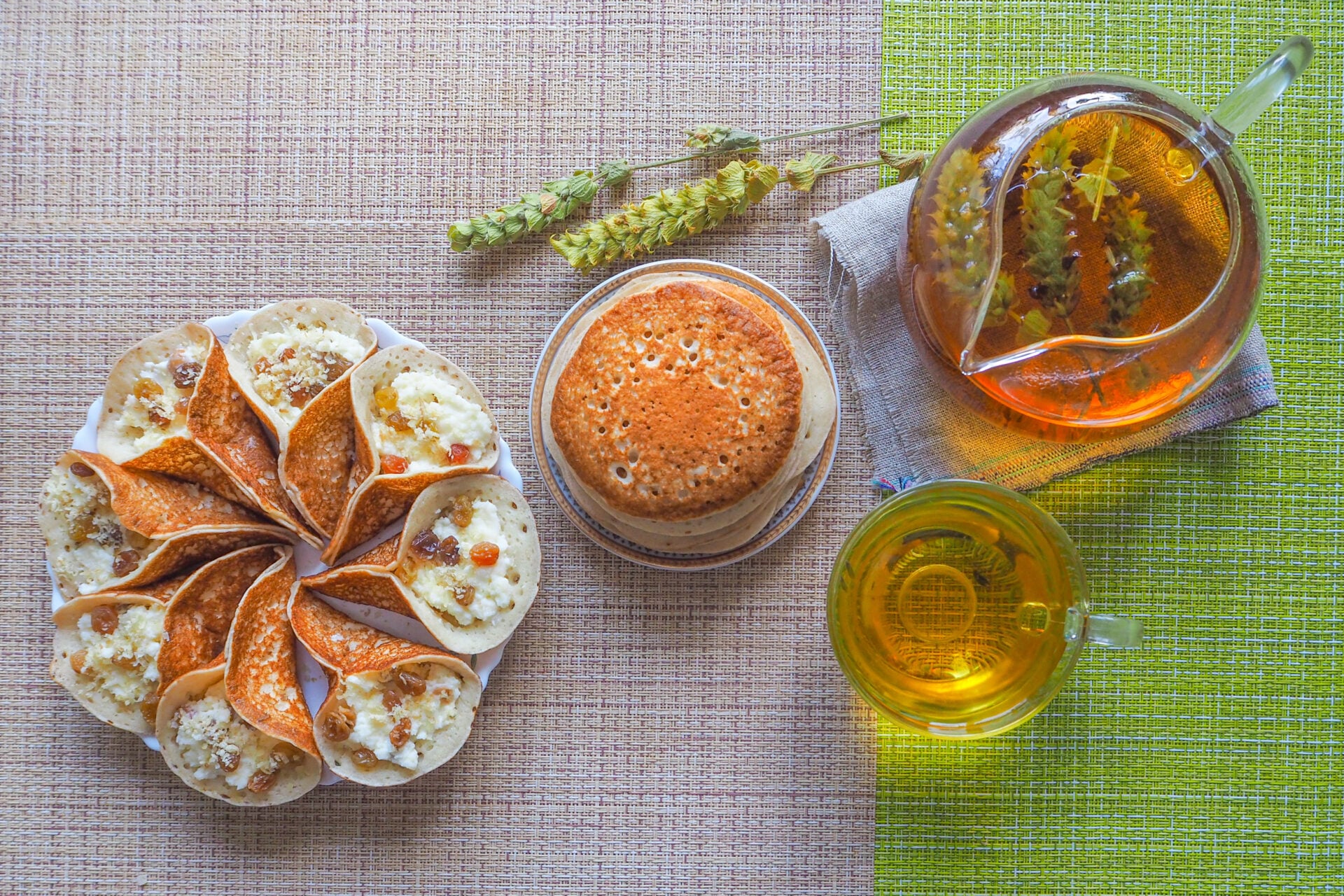
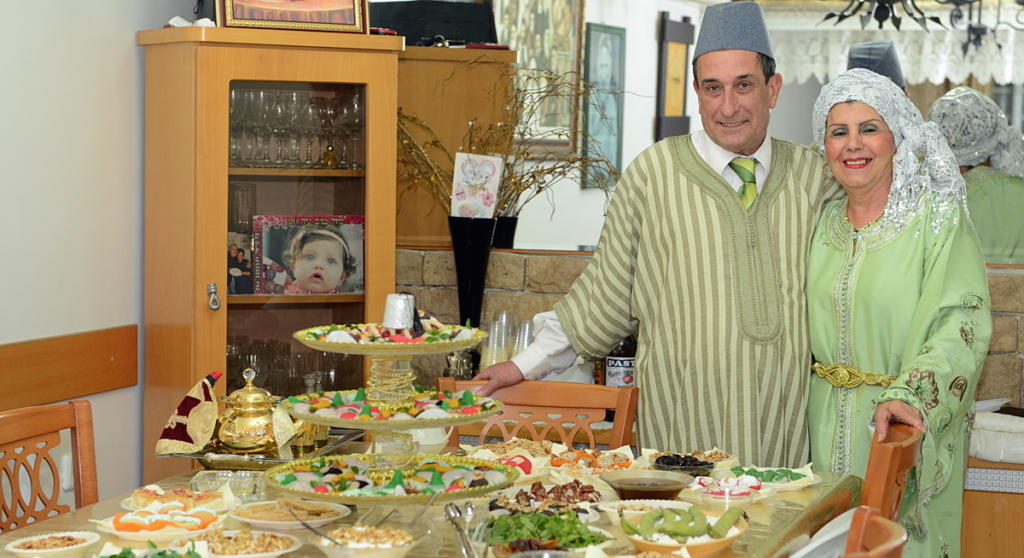
Significance: It celebrates faith in redemption, good fortune, and the beginning of the agricultural spring season. It is often used as a time to pray for abundance. Food and Tradition: Tables are filled with symbols of prosperity and fertility, including flowers, wheat stalks, and bowls with live fish. The signature food is mufleta (a thin, pan-fried pancake served with honey and butter), as it is the first flour product made once leavening is allowed again. Hospitality: A core aspect of Mimouna is opening one's home to neighbors and friends—often including Muslim neighbors in its original Moroccan context—to share sweets, tea, and goodwill. Customs: Many celebrate on the following day with picnics, beach outings, and by visiting the graves of beloved ancestors. Origin: The name is thought to stem from emunah (faith) or ma'amoun (wealth/good fortune). Another tradition links it to Maimon, the father of the philosopher Maimonides, who passed away on the day after Passover. Modern Day: While it began as a North African custom, Mimouna has become a massive, popular public celebration in Israel, often featuring in parks and communal gatherings. Note: The day after Passover is also known generally in Jewish tradition as Isru Chag, a day on which it is forbidden to fast. |