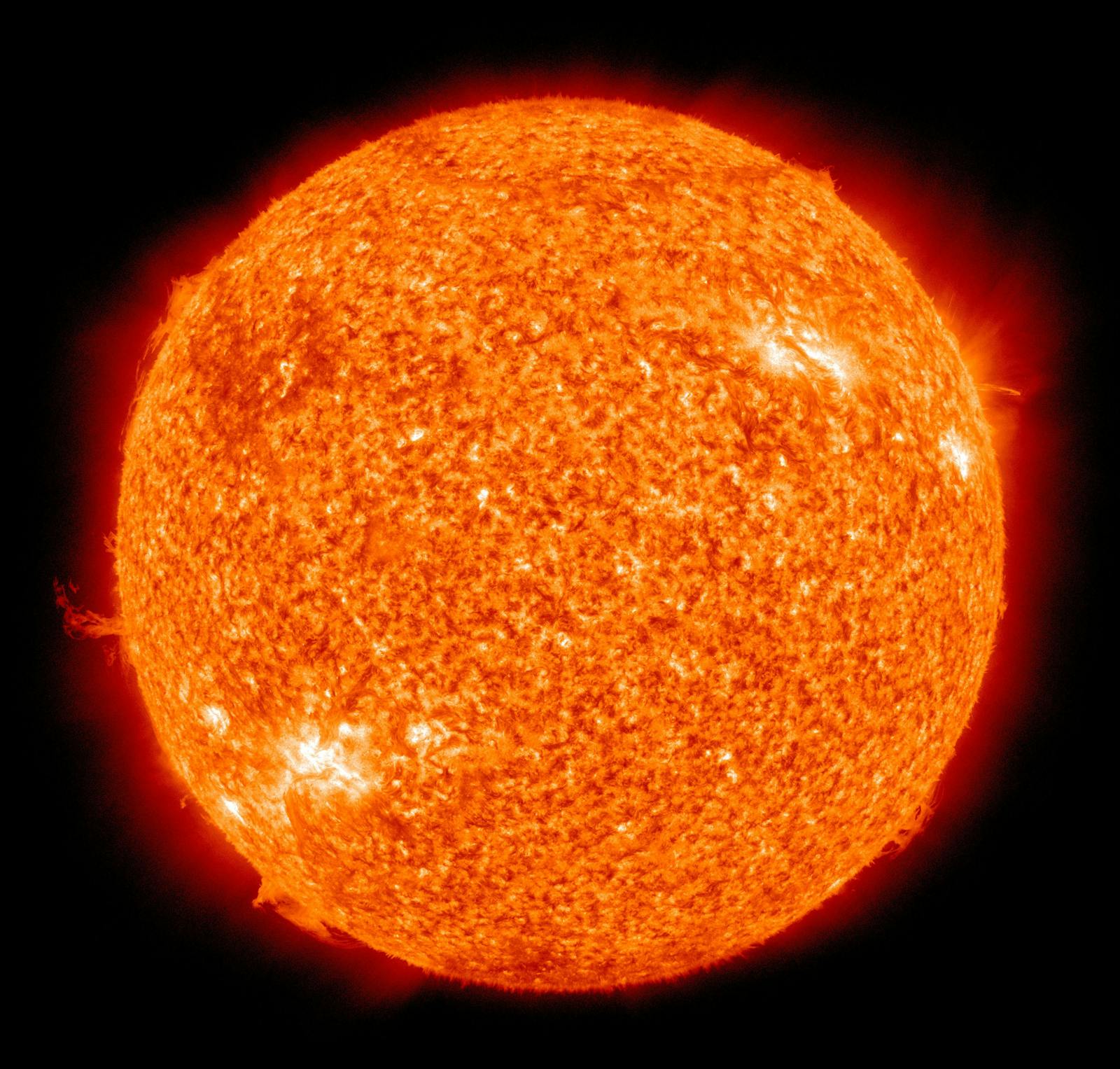
The Parker Solar Probe is now flying through the Sun's outer atmosphere at 430,000 miles per hour, fast enough to cross the continental United States in 20 seconds, and its heat shield protects the instruments behind it by keeping them at room temperature while the front face glows at 2,500 degrees Fahrenheit.On the front of the Parker Solar Probe, a slab of carbon foam four and a half inches thick is glowing at around 2,500 degrees Fahrenheit. That gap, between a face hot enough to soften steel and a payload bay cool enough to touch, is the central trick of the entire mission. It is also the reason a probe to the Sun’s corona, an idea first proposed in 1958, took sixty years to fly. Sixty years waiting for a materialThe concept was proposed the same year NASA was founded. In October 1958, the National Academy of Sciences Space Studies Board issued an interim report from a committee chaired by University of Chicago physicist John Simpson, recommending a spacecraft that would fly inside the orbit of Mercury and sample the particles and fields near the Sun directly. The mission editorial in Space Science Reviews traces the lineage of every subsequent solar probe proposal back to that one document. Nothing in the materials catalog could survive the conditions. Decade after decade the mission was sketched out, costed, and shelved. Trajectories that used Jupiter for a gravity assist required a nuclear power source, since solar panels are nearly useless that far out. A redesign in the mid-2000s switched the plan to seven Venus flybys instead, which kept the spacecraft close enough to the Sun to run on photovoltaics but pushed the engineering problem onto the heat shield. The carbon-carbon composite with a carbon foam core that eventually made the mission possible did not exist as a flight-rated material until engineers at Johns Hopkins Applied Physics Laboratory and Carbon-Carbon Advanced Technologies developed it specifically for this spacecraft. The engineering effort behind the shield spanned two decades. https://spacedaily.com/sd-the-... |