Thursday, June 6, 2019

Shavuot 2019 What you need to know about this holiday, (including places to go for all night study) which begins at sundown on Saturday, June 8 And Consumed by Fire-Remembering life in Shlomo Carlebach’s Israeli moshav, now engulfed by flames By Shaul Magid

Can't see images? Click here...

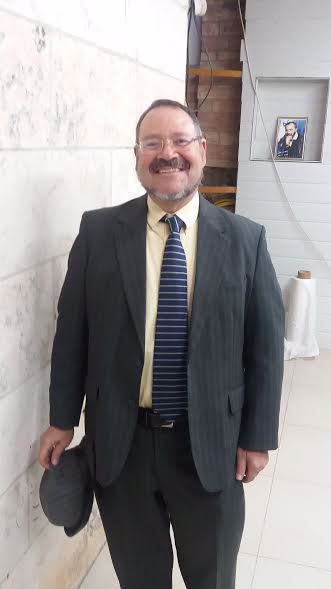
Yehuda Lave, Spiritual Advisor and Counselor

Yehuda Lave is an author, journalist, psychologist, rabbi, spiritual teacher and coach, with degrees in business, psychology and Jewish Law. He works  with people from all walks of life and helps them in their search for greater happiness, meaning, business advice on saving money,  and spiritual engagement.

I would like to add at this point, that today is June 6. This is the calendar day that we reacquired the old city. 6/6/67. Jerusalem is mentioned 667 times in the Tanach.

Insults Are Subjective

Insults are based on the insulter's subjective point of view. Realize that the person is making a "to me" statement. For example, he is saying, "To me you seem selfish." Ask yourself, "On what is he basing his insult? Is it based on fact or opinion?" Then ask yourself, "Do I agree with his basic assumptions?"

If you let someone's insult bother you, it implies that you consider his opinion of you to be more important than your own opinion of yourself. Actually, if you agree with he says, try to improve yourself. If you disagree, disregard the insult.


Love Yehuda Lave

Shuvuot begins Saturday night so plan on which place to fo for all night study from list below (English Places)

All night study on Shavuot night has become all the rage in Israel.

There are at least six places to go, and I can't print all their schedules as there isn't enough space, but check them out today and tomorrow so you can have a game plan as to where you want to go. Nearly all are free and give you good eats to keep you up all night.

The OU has a fabulous program with dinner if you sign up for it and a class on Sunday day as well at 5:00 with Rabbi Sprecher as well. There is a full schedule with Rabbi Sprecher coming on at 12

Yershurin has a full schedule as well with Rabbi Sprecher coming on at 2:00 AM there

Yebonah has a full program with Rabbi Aaron Poston and the famous Rabbi Singer speaking

Chabad on King George has a several speakers

The Land of Israel, a new kid on the block has a full paid program going with many speakers at the Mount Zion hotel, and at the last minute they decided to open it up and make the Saturday night program free and there are many speakers

The Begin Center has a new program this year with English Speakers through the night

Beit Avi High is always a popular program as they do appeal to a less Orthodox crowd with more open topics

Horvai Zion has a mostly Hebrew program with some English speakers

Beit Hanassi (Rabbi Wein's shul) always has a good program

The Nezak Israel program will be good and in English

The same goes for Netzavim Synagogue

Shier Hadash will have a program at Rabbi Pear's house

Pinsker won't have any speakers but will be open for study all night

Finally there are now some Good programs in Tel Aviv for Orthodox English speakers as well


Shavuot 2019 What you need to know about this holiday, which begins at sundown on June 8.

Shavuot 101

Shavuot

My Jewish Learning is a not-for-profit and relies on your help

Shavuot 2019 begins at sunset on Saturday, June 8 and ends at sundown on Monday, June 10. (In Israel on Sunday night only one day)

What is Shavuot?

Shavuot, the feast of weeks, is celebrated seven weeks after the second Passover Seder. Although Shavuot began as an ancient grain harvest festival, the holiday has been identified since biblical times with the giving of the Torah on Mount Sinai.

Learn more about the history of Shavuot here.

What are some customs and practices for Shavuot?

– To commemorate the giving of the Torah at Sinai there is a tradition of staying up all night studying Jewish texts in what is called a tikkun.

– On Shavuot the Book of Ruth is read.

– Traditionally dairy foods are eaten on Shavuot.

– In order to mark the agricultural history of Shavuot, some decorate their house and synagogues with a floral theme.

Adult Red-tailed Hawk feeding its chicks.

Consumed by Fire-Remembering life in Shlomo Carlebach's Israeli moshav, now engulfed in flames By Shaul Magid

It's a Shlomo Shabbos." Anyone living in Israel in the 1980s and early 1990s (which included yours truly-Yehuda Lave)who was part of the religious counterculture, from wayward haredim in Jerusalem to hippies in Pardes Chana, knew what that meant.

It meant that Shlomo Carlebach would be on Moshav Me'or Modiim for Shabbat, a frequent event that would attract a plethora of Jews (and some non-Jews) to an impromptu Shabbat retreat. By Friday afternoon people began arriving, in cars, vans, taxis, hitchhiking and on foot, looking for a place to crash, often setting up tents in backyards and the nearby Ben Shemen forest that buttressed the moshav. Later on, guest-houses were established to house the fellow-travelers for a small fee. It was a kind of bi-monthly mini-Woodstock with only one musical performance, Shlomo davening.

Those Shabbosim had the feel of a combination of an Isaac Bashevis Singer novel, a Roman Vishniac photograph, a Marc Chagall painting, and San Francisco's Summer of Love.

Through his davening, storytelling, and teaching, Shlomo was the center of an orbit of celebration and mayhem. If you were lucky, you got a corner on the floor of a Moshav member's house to sleep, and the dining hall provided organic food for collective meals. Hasidim mingled with backpackers, children played happily unattended, and the smell of marijuana drifted through the ancient ruins of the Maccabees. It had the feel of a pilgrimage. For us, it was just "a Shlomo Shabbos."

Moshav Me'or Modiim burned to the ground last week, on Lag B'Omer. What remains are burned-out houses, charred cars, scorched earth, and the remnants of a collective community. In recent years, much of the discussion of Carlebach's legacy has centered around his inappropriate behavior toward women. And rightly so. But today we are reminded how his legacy also stretched to the community around him—a community that took on a life of its own in Moshav Modiim, a place vibrant with visitors but also families, houses, and entwined lives.

It was a place where children were raised, people fell in and out of love, Torah was studied, and friends were mourned. Great people are often tragic, driven by their own demons, and their charisma can be destructive. But the places and communities they inspire can transcend them. "The moshav" was such a place.

Moshav Modiim was founded by a small group of disciples of Shlomo Carlebach in 1975, some of whom were part of his House of Love and Prayer in San Francisco. When they approached the Jewish Agency stating their desire to start a collective commune (a Moshav Shitufi) founded on the spiritual vision of their counter-cultural "rebbe," the Israeli authorities were mostly bemused by this band of American hippies, thinking they would never succeed. Perhaps partly as a joke, they gave them a small abandoned moshav in disrepair on a road that literally led nowhere, buttressing the Ben Shemen forest near the town of Lod.

In 1979, I started hanging around what was even then simply called "the moshav." It was a bleak place. Houses were unfinished, with little or no heat; there was only one phone, often broken; the land was rocky, the winters windy and cold, and the summers unbearably hot. Yet this small band of romantics were determined. They began an organic granola factory and began making tofu to sell in what was then a very small health food market. They were often viewed by hard-nosed Israelis as quaint American hippies living a fantasy. It would not last long.

But the real purpose of the moshav was to create a rural "back to the land" spiritual community around Shlomo's vision of an Eastern European shtetl that "turned on, tuned in, and dropped out." He would visit infrequently in those years, and even when he did in the late 70s and early 80s, the hevra in Israel was still quite modest. People struggled. Many had little money and no marketable skills. Many barely knew Hebrew. The chances of them succeeding in Israel was minimal. But the skeptics did not quite realize what "the hevra" was about.

These were not your average upper middle class American Jews coming to Israel for a joyride to then return to the comfort of their affluent lives. These were self-styled spiritual revolutionaries— artists, musicians, craftspeople, midwives, writers, yoga instructors, and poets. Many had left the comforts of their homes to join the counterculture in America and discovered Judaism through Shlomo.

The came already living off the grid. I know because I was one of them, although I came a bit late to the party. I first met Shlomo in the late 1970s at a Shabbat Retreat with Zalman Schachter-Shalomi at The Freedom Farm outside Philadelphia although I had heard about him before. I soon moved to Israel to study in yeshiva and met "hevra" who brought me to the moshav when it was just beginning. In our early 20s, we were a bit younger than many of the moshavniks at the time, and many served as mentors to us as we made our way through the labyrinth of the Israeli haredi and neo-haredi world. I remember making granola while we reviewed Hasidic stories or homilies as we worked. I felt I had found a home. Or a fantasy. In those years there was little difference.

Those of us inspired by Shlomo all have their stories, and I will not rehearse mine. This is about the moshav. I moved with my then-wife Penina and young children to the moshav in 1985, and lived there until the end of 1989. These were halcyon years in the life on "the moshav." Shlomo was around a great deal. The moshav had laid down roots. Businesses flourished in "the moshav" kind of way, and it became a center of "Shlomo" events. The moshav began hosting festivals for Passover and Sukkot, and instituted a Carlebach retreat center for Jewish music, art, and crafts.

It was the beginning of the commodification of Shlomo, albeit done in a way that still retained an openness and "freakiness" that was part of its charm. Proving the administrative skeptics wrong, "the moshav" made it. More than that, it became a historic part of late twentieth-century Judaism. And now it is in ashes.

So as not to romanticize a complicated community, I should stress that there were many fissures and problems, including affairs, divorces, petty crime, in-fighting, and children who could not easily acclimate to Israeli society (many attended school in Lod, at that time an impoverished and troubled development town). One of the problems with the expansive "hevra," and Shlomo's inability or unwillingness to draw boundaries (in many regards), is that the moshav attracted some nefarious and deeply troubled characters, people who were marginalized elsewhere but felt included in the ethos of the counterculture. All too often, such ostensible "hevra" took advantage of members.

The moshav's Judaism was a strange amalgam with contradictory affiliations. It had a vexed relationship with the secular world and American culture in general. It was really a special kind of American-Israeli countercultural synthesis long after the American counter-culture disappeared. Over time, some members moved more toward the conventional haredi world, others became less religious, and still others retained a countercultural religiosity in some idiosyncratic form. Yet they all remained Carlbachean." In my experience, even though differences existed and even increased over time (my own political views were certainly not the norm), the sense of purpose promulgated by Shlomo, both real and imagined, kept the hevra together and enabled the moshav to grow in stature and influence. By the late 1980s until today, when young American tourists visit Israel they are often asked, "Did you visit the moshav?"

After Shlomo's passing in 1994, the moshav went into a transitional phase. It began to erect a center in his memory. His house on the moshav remained intact, and it became a kind of Carlebach "mecca" and a museum with many of his books and memorabilia. That house, too, was consumed in fire. In addition, the moshav had to confront serious financial challenges and began to expand, whereby its collective ethos yielded to a general Israeli phase of privatization. Many new homes were built by those with only marginal connection to the original telos of the moshav. The new city of Modiin (on land that used to house a Bedouin camp when I lived there) made the area much more attractive. A new road that bypassed the three Arab villages we used to drive through to get to Jerusalem enabled the area to become a pricey suburb where one could easily commute to either Tel Aviv and Jerusalem.

But even given the fact that the moshav was now sitting on a gold mine, it largely remained the place that time forgot. And that was a good thing. The original members who remained were doggedly dedicated to their countercultural vision of Jewish life and practice, many identifying more with the rebellious Maccabees who once dwelled in those hills than the upwardly mobile Israelis who wanted a suburban escape from their city jobs. When I first arrived in 1979, there were only a handful of families. When I lived there in the 1980s, there were 28 houses. By 2019, there over about 60 houses.

While mourning the destruction of a place is different than mourning the loss of a person, there may be more similarity than one thinks. When I was telling my mother, who had often visited us when we lived on the moshav, about this tragedy, she responded laconically that "it is the end of a way of life." I pondered her comment long after our conversation. I had never quite thought of the moshav that way – "a way of life" – in part because I was so immersed in it I could not quite see outside it. But for someone like her, an outsider, who periodically entered as a visitor, what she saw was not only a community but "a way of life." And indeed it was.

That ragtag group of dreamers in 1975, "tuned in and turned on" by Shlomo's fusion of an imagined Eastern Europe and the American counterculture, driven by an equally imagined vision of Erez Yisrael renewed and what he called "The Holy Temple" (less the place than the idea), created "a way of life." And in a way, that way of life went up in flames and is now no more. Me'or Modiim can be re-built. But it is not at all clear it will continue to "the moshav." The flames not only destroyed the homes of people who dedicated their lives to renew Judaism, it also took with it the spirit of rebellion and the sheer will of an unlikely garin (core group) to alter the Israeli landscape.

There is something tragically ironic about this fire on Lag B'Omer, a day that tradition tells us the yahrzeit of Shimon bar Yohai, the mystical folk hero and student of Rabbi Akiva, marking the end of a plague that had claimed the lives of so many Jews in the second century CE. Fire literally engulfs stories about both masters. Rabbi Akiva is consumed in fire by the Romans in defiance of the prohibition of studying Torah, and when R. Shimon's son Eliezer emerged from a cave studying for Torah's esoteric wisdom for years with his father, his mere gaze consumed a hapless farmer in flames. The Talmud tells us Eliezer's passion could not tolerate the mundanities of the world. It was then decreed he return to the cave until which time he could integrate the loftiness of those secrets with the quotidian acts of a simple man.

Moshav Modiim was an interesting combination of the ideals expressed in these two stories. Shlomo's Judaism as embodied in "the moshav" was one of defiance of normative Jewish life— not a rejection but a defiance of the mundane qualities that often plague religious practice. It often broke the shell in search of finding the seed, imagining how Judaism can look and feel different. Shlomo often referred to someone who was absorbed in devotion and study by saying "he's on fire." This is not an uncommon metaphor in Hasidic circles but, given this tragedy, a telling one nonetheless. In terms of Eliezer son of Shimon, one of the emblematic things about "the moshav" was how it envisioned itself as a de-urbanized "back to the garden" Judaism.

Many of its members wanted to work the land and live outside the trappings of city life. In a sense, they tried to embody both Eliezer and the farmer gathering his crop, to burn with the fire of Torah and plant seeds to harvest the fruits of the land.

It is interesting to recall that the original name of the moshav was Mevo Modiim (the Entrance to Modiim), indicating its location as an entry-point to Ezor Modiim (the Modiim Region). But its members petitioned to change the name to Me'or Modiim (The Light of Modiim) gesturing toward the Maccabees and Hanukkah as well as, perhaps, marking their aspiration that the moshav would contain the fire of Torah. And for many decades, it did. Yet we know that the fire that builds is also the fire that destroys. And for reasons we will never know, the fire that burned bright has now been consumed by a fire that burned dark.

Yet there is another fire we must not forget – the ner timidi – the fire that burns and is never extinguished. There is in "the hevra" a ner timidi. Their entire existence is a surprise, and I believe they will continue to surprise us. As a "holy brother" said to me, "they are probably dancing this Shabbos to Shlomo's Lekha Dodi."

Thankfully, there was no loss of life. But as my mother so aptly put it, there was a loss of "a way of life." May the ner timidi of "the moshav," its inextinguishable flame, continue to burn in the hearts of those who were warmed by its light, inspired by its vision, and embraced by its love.


Shaul Magid, a Tablet contributing editor, is the Distinguished Fellow of Jewish Studies at Dartmouth College and Kogod Senior Research Fellow at The Shalom Hartman Institute of North America. His latest books are Piety and Rebellion: Essays in Hasidism and The Bible The Talmud and the New Testament: Elijah Zvi Soloveitchik's Commentray to the Gospels.

'I left the house with my guitar and came back to ashes'

Musician Yisrael Portnoy tells Arutz Sheva about being evacuated from Mevo Modi'im and learning his home had been reduced to ashes.

Yisrael Portnoy, a musician who lives in Mevo Modi'im, told Arutz Sheva about his experience being evacuated from his home on Lag B'Omer (Thursday), the support he received from the Jewish people, his house that was burned down and the optimism he maintains during the difficult moments.

"Everything happened really fast, too fast. It was Lag B'Omer and we were told to get out of the moshav. I was in the middle of playing guitar so I left with a guitar in my hand, without a wallet or passport. This was the last time we were in the house and now everything is ashes."

The conversation with Portnoy took place before he entered his house to see what was left, but a friend already told him what to expect. "My friend was inside and he said, 'There's nothing to see. Everything is ashes.' I had this great clubhouse next to the house made out of wood full of vintage guitars and a home studio and everything....is gone."

"On the one hand, we lost everything. On the other hand, it's amazing how much this whole nation comes together and offers to help," Portnoy said. "I even had to turn off my phone. There were too many people calling with all sorts of suggestions for everything, from offers to buy a phone at cost to the most elementary things."

Portnoy's works went up in flames but he's determined to continue creating. "I've been creating things from the age of six and I'll always be creating things. But the reality is that everything - the guitars and the musical instruments and the studio - all these things are material and one day I'll have the same things. But what really hurts the most personally is that I had so many papers which I've written for many years - my writings and melodies."

"I also lost my recordings that were on a hard disk that was also in the studio. But don't focus only on me. Everyone here has a story. This is a community where we'll return stronger than we ever were. It will be a long process but we'll do it little by little."

Michael Golomb about Reb Shlomo on Moshav Meor Modiim

Michael Golomb interview on Sukkot Oct 23 2013 about Reb Shlomo on Moshav Meor Modiim

Chabad of Poway dedicates Torah scroll in memory of shooting victim

The scroll was dedicated in memory of Lori Gilbert Kaye, 60, who was killed during the April 27 shooting on the last day of the Jewish holiday of Passover.

Shavuot 2019 in Jerusalem

Shavuot 2019 in Jerusalem will take place starting June 8 and finish on June 9.

Shavuot holiday is one of the three Biblical pilgrimage festivals, and therefore, it is one of the best times to come and visit Jerusalem. People stay up all night, the ambience is spiritual and energetic, the food is incredible, and the city is alive!

The holiday marks the culmination of the Omer – 49 days of daily counting between Passover and Shavuot. It is a large harvest celebration and usually people drink lots of wine and eat lots of refined cheese.

There is an amazing amount of Torah learning opportunities available on Shavuot night in Jerusalem. If you decide to walk around to take in the Shavuot ambiance, you will find a quiet yet energetic feel on the streets.

All that being said, maybe the most special experience of all on Shavuot night, or should I say at dawn, is to join thousands of people at the Western Wall slightly before sunrise in order to experience dawn breaking at this holy site. Notice how, as the sun rises, hundreds raise their voices in the recitation of the prayer Shma Yisrael, fulfilling the tradition of reciting this prayer as early in the day as possible.

Be prepared for a cool evening and a hot morning. Bring a sweater over short sleeves, a bottle of water, and a sun hat.

Shavuot falls on the sixth of Sivan. This year it falls on the eve of June 8 and lasts for one day in Israel, two days out of Israel.

See you tomorrow, bli neder

Love Yehuda Lave

Rabbi Yehuda Lave

2850 Womble Road, Suite 100-619, San Diego
United States

LIKE TWEET FORWARD

You received this email because you signed up on our website or made purchase from us.

Unsubscribe

Wednesday, June 5, 2019

Construction For Davidka Square Approved

Strive for excellence in middos, not perfection. No one is always happy or prudent. Be accepting of your limitations and more tolerant when there are external pressures.
Love Yehuda Lave

Construction For Davidka Square Approved

The historic square will be renewed as part of the "פינוי בינוי" project.

Last week, the local Planning and Building Committee of the Jerusalem Municipality approved a plan for urban renewal for Davidka Square. This plan includes the demolition of an existing four-story building with 74 housing units (39 of which are used as a hostel) and 18 stores, and the construction of a new 8-story building and a 30-story tower.

The new plan will create a new commercial front for all the surrounding streets, an internal public passageway that will connect 172 residential units of various sizes to the building adjacent to the east, as well as office space and the Abraham Hostel, which is expected to return to the new building.

In addition, the new building will include public toilets on street level, about 450 square meters will be used for municipal needs, as well as three day care centers.

The Mayor of Jerusalem, Moshe Lion commented saying: Davidka is a historical gem in the center of Jerusalem. The promotion of municipal renewal plans in the center of the capital will make it a more attractive city and will place it in the highest standard comparatively to some of the most beautiful cities in the world. "


Information About Davidka:

Davidka Square is a nickname for Freedom Square, a central square in Jerusalem near the Mahane Yehuda market. The square meets Jaffa Street, the main street of the city. On one side of the square there is Binyan Klal, and on the other side of the road is the Davidka hostel, which was converted into a hostel for backpackers which is now called the Abraham Hostel.


Attached: Illustrations/ credit -office of Eli Reches Architects


MyHeritage Completed Digitizing All of Israel's Cemeteries!

  •  By Esther ·


We're very happy to announce that, after five years of dedicated efforts, we've completed our ambitious goal of digitizing every cemetery in Israel. It is now the first country in the world to have almost all of its gravestones preserved and searchable online, with images, locations, and fully transcribed records. We've put up all this content for free, too!

Background

Back in February 2014, we teamed up with BillionGraves to launch a global crowdsourcing initiative to digitally preserve the world's cemeteries. It is essential to digitize cemeteries, by photographing the gravestones and transcribing them, because of the key role that gravestones play in family history. They provide vital information such as a person's name, the names of close relatives and dates of birth and death. Sometimes they even describe the deceased's character and personality. Most of the world's cemeteries have never been systematically documented or made available online; MyHeritage and BillionGraves sought to change this.

Age and exposure to the elements are causing the gravestones to fade, rendering them illegible. It is becoming harder, and sometimes impossible, to read them and know who has been buried there. This adds to the urgency of the project. Even as gravestones continue to wither away, we can ensure that the footprints of our ancestors do not.

Our generation is blessed with the necessary tools available, and so it is up to us to preserve this valuable information. BillionGraves is a unique application, available for both iOS and Android, which allows users to volunteer and photograph gravestones. Photographs are then transcribed by additional volunteers on the BillionGraves website, resulting in searchable digital data. Besides being very easy to use, BillionGraves automatically captures the exact GPS coordinates of every gravestone when photographed. This allows others to locate, visit or re-photograph any gravestone of interest and reduces duplication by allowing volunteers to focus on parts of cemeteries not handled before.

MyHeritage employees kickstarted the effort by first digitizing Segula Cemetery, one of the oldest cemeteries in Israel. In a single day, we took 73,000 photos in order to index them shortly afterwards. A few months later, we brought friends and genealogy organizations along with our employees to digitize Holon cemetery, the largest cemetery in Israel, with over 200,000 graves. It was one of the largest events of its kind ever organized – in the world!

At launch, MyHeritage Founder and CEO, Gilad Japhet, explained the importance of this work:

Project overview

Through our global initiative with BillionGraves, MyHeritage has referred 33,400 new volunteers to BillionGraves. Those users have taken 3.5 million photographs and contributed 3.2 million transcriptions.

In Israel specifically, we found it necessary to recruit full-time employees to complete the work. We hired 5-6 full-time photographers and several dozen transcribers, and have invested more than one million dollars on this important and time-sensitive project. All told, we photographed 638 cemeteries throughout Israel. 2.1 million photos were taken of 1.5 million gravestones, resulting in approximately 1.4 photos taken per grave. This kind of project is never 100% complete because there are constantly new burials, and we'll need to develop a strategy for handling them in the future.

Notable gravestones

During our mission, we were honored to digitize the photographs of many notable individuals who had an enormous impact on historical events. Here are just two examples.

David Ben-Gurion (1886-1973) was one of the primary founders of the State of Israel and its first Prime Minister.

Israeli singer, songwriter and composer Naomi Shemer (1930-2004) was commonly known as the "First Lady of Israeli Song."

How to access the gravestone records

On SuperSearch, we've created a collection of millions of indexed gravestone records, ensuring the preservation of this vital information. The database is available for family historians and genealogists and searchable online for free. The same data is also available on BillionGraves.com for free.

Join our initiative!

Preserving cemeteries is a significant project, which we're committed to carrying out worldwide. We invite you to join our initiative by helping us digitize the cemeteries of the world. You can help by photographing gravestone in your area and transcribing your photos or those taken by other volunteers. We encourage MyHeritage users to contribute to the future of family history research and to help preserve their own family legacies, as well as the legacies of others.

Using the free BillionGraves mobile application, anyone can take photos and document gravestones. All gravestone photos are transcribed by volunteers using the BillionGraves app or website, and the records are then added to MyHeritage SuperSearch and BillionGraves — where they are made available to users for free. MyHeritage Record Matching technology automatically notifies users on MyHeritage and Geni whenever a gravestone has been added for one of their ancestors.

Conclusion

Completing the project of digitizing all of Israel's cemeteries is a milestone worthy of celebration and a tribute to our commitment to preserving valuable family history information for future generations. We hope that this effort will help members of the global genealogy community discover their family history and the final resting place of their ancestors.

 NEW FILM: "Pay to Slay": The UNRWA Connection


NEW FILM PROPOSAL SEEKS SPONSOR.
 
A POWERFUL MOVIE


May, 2019
 
NEW FILM: "Pay to Slay": The UNRWA Connection
 
(c) 2019 David Bedein 
 
In most societies, those who commit murder are punished.
However, in the PLO culture, people are given incentives by the Palestinian
Authority to murder a Jew.
Each year, more than $300 million are  distributed to the killers and to
their families by the PLO regime, known as the Palestinian Authority.
In the United Nations Relief and Works Agency Palestinian refugee camps, where
the slogan of UNRWA schools is the "right of return by force of
arms",  payments act as an incentive for young Palestinians to commit
acts of terror , even if they die as martyrs in the process.  
Over the years, more than 40 Palestinians educated in UNRWA-Palestinian schools
– by teachers tied to Arab terror organizations – have become homicide bombers,
killing 83 and wounded nearly 500 people.
Thousands of  UNRWA-educated Palestinians have been jailed for attempted
murder.
This film  will examine the "Pay to Slay" policy as it impacts upon UNRWA,
where killers become heroes of society.
We will interview Palestinian convicts  from UNRWA refugee camps whose
families receive monthly "Pay to Slay" stipends from the Palestinian government
as their reward for conducting acts of murder.
We will then  interview Jewish families who cope with the loss of their
murdered relatives, pained by the fact that families of those who killed their
loved ones receive gratuities for their "deed"  for the rest of their lives.
This emotional and ethical quandary will be further explored in the film as we
examine the influence that PLO and Hamas leadership bear upon children.
Much of this  emanates from brainwashing children in UNRWA
schools - cauldrons of vicious anti-Semitism.
In UNRWA schools, Palestinian children are taught that Jews are subhuman,  descendants of pigs and apes. As part of its new curriculum, UNRWA school books do not recognize Israel or any kind co-existence with Israel, which instead call for  liberation of the all of "Palestine,"
including Israel's pre-1967 territory. Instead, UNRWA schools host plays about
martyrdom, kidnapping Israelis, and the "Right of Return by force of arms" (which
would envision  5 million people with Palestinian heritage  reclaiming  Arab villages  now part of Israel).
In that context,  UNRWA  welcomes paramilitary organizations of child soldiers  into 
their schools. Each year, over 10,000 Palestinian children receive intense weapons training at
Palestinian "War Games" set up in Gaza.
Funds for weapons derives from pilfered humanitarian supplies.
Ultimately, the film will portray the disconnect between  two cultures and the
priorities of the two societies: Palestinians, educated by UNRWA and ruled by
strongmen in Gaza and Ramallah, seek Israel's destruction through war,
murder and financial incentives; Israelis, living under a vibrant
democracy, where their schools focus on  peace, understanding and
coexistence with their Palestinian neighbors.

This September, UNRWA faces an unprecedented  challenge to renew its mandate at the UN.
Our task is to ask donor nations to attach conditions to the UNRWA mandate. in the context of 
"UNRWA Reform Initiative" 


We seek partners to produce this film, which will be screened for decision-makers worldwide, to brings UNRWA policy briefings to the highest levels of governments and to the UN itself

Join our efforts!  Donation avenues in the US, Israel and the UK:  https://israelbehindthenews.com/donations/

UNRWA students hold Israeli hostage at school play.png


המרכז לחקר מדיניות המזרח התיכון  
ת.ד. 71098  בית אגרון, רח' הלל 37, ירושלים 94581  ◼  02-6236368


See you tomorrow

Love Yehuda Lave
View this email in your browser
You are receiving this email because of your relationship with Yehuda Lave, Spiritual Advisor and Counselor. If you do not wish to receive any more emails, you can unsubscribe here.
This message was sent to aaaamerican.hescedlove@blogger.com by yehudalave@yehudalave.co
Jerusalem, Israel, California, 92106


Unsubscribe from all mailings Unsubscribe | Manage Subscription | Forward Email | Report Abuse